Digital Gift Cards
Global Gift Cards
CROSS BORDER GIFTCARD


A player hits a retention milestone at 2 a.m. local time in Manila. A tournament bracket closes in São Paulo and forty finalists are owed prize money within the hour the rules promised. A mobile game's loyalty program needs to push a small thank-you reward to ten thousand players across six currencies before the weekend event ends. None of these moments care whether the platform's payments team has finished building a wallet. For gaming and esports platforms, the question isn't whether players get rewarded, it's whether the infrastructure behind that reward can keep up with how players actually expect to be paid.
In short: Gaming platforms handling retention rewards, tournament prize money, and milestone bonuses generally face a build-vs-buy decision between standing up an in-house payout wallet or integrating a gift card API. Building in-house buys full control but adds licensing, fraud, and multi-currency engineering overhead that can take a year or more to mature; a gift card API trades some flexibility for immediate global reach, faster time-to-launch, and lower compliance burden, since gift cards are typically closed-loop rewards rather than cash-equivalent instruments.
Player expectations around payout speed are already outpacing what many platforms have built. Just half of gamers currently have access to instant payouts, even though eight in ten say they would prefer them, according to PYMNTS Intelligence's research with Ingo Payments (PYMNTS, Only Half of Gamers Have Access to the Instant Payouts That 8 in 10 Prefer, 2023). That gap between expectation and infrastructure is exactly where the build-vs-buy decision lives.
Reward payouts in gaming rarely fit neatly into one category. A single platform might need to settle three very different obligations at once: a retention bonus credited automatically when a player returns after a dormant period, a tournament prize owed contractually the moment a bracket resolves, and a milestone reward triggered by an in-game achievement that has nothing to do with real-money wagering. Each of these carries its own timing pressure and its own regulatory shadow.
Tournament prize money in particular tends to draw the most scrutiny, since it can resemble a cash payout even when the platform frames it as a reward. Retention and milestone rewards are usually easier to treat as non-cash incentives, but only if the payout method itself is unambiguously non-cash. That distinction, cash-equivalent versus closed-loop reward, is often the single biggest factor in how much compliance overhead a platform takes on.
Add a global player base to that mix and the complexity compounds. Players in Southeast Asia, Latin America, and Eastern Europe don't share a banking rail, a preferred currency, or the same expectations around delivery speed. A platform that only serves players in one country can get away with a single payout rail. A platform with players in twenty countries is, whether it intends to or not, building international payments infrastructure.
Standing up a proprietary wallet gives a platform full control over the player experience, and for platforms with unusual payout logic or deep enough engineering budgets, that control can be worth it. But the honest list of what "in-house" actually requires is longer than most product roadmaps initially account for:
None of this is a one-time build. It's a standing team, and it grows with the player base rather than shrinking. For a platform whose core product is the game, not payments, that's a meaningful diversion of engineering and compliance resources away from the thing players actually showed up for.
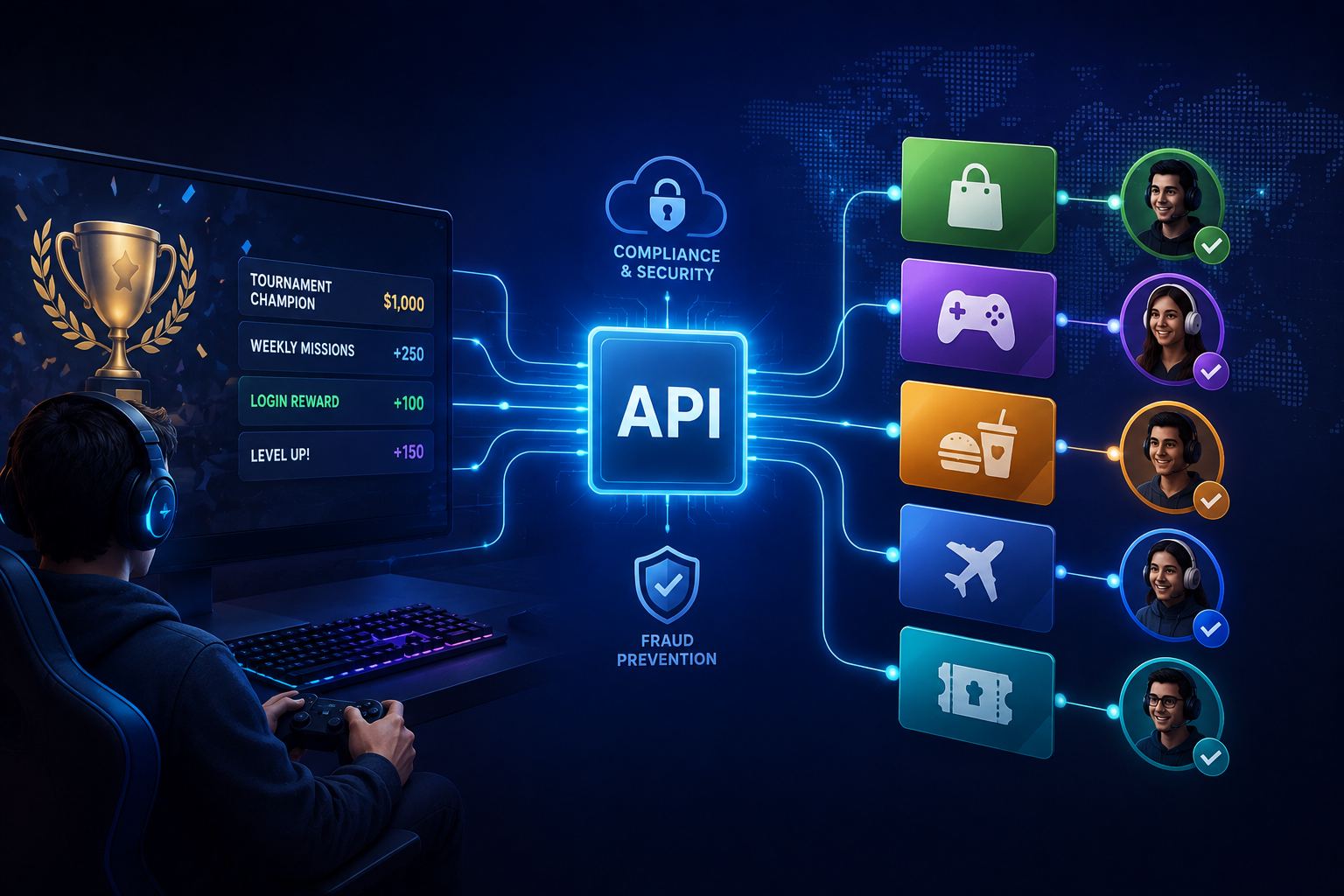
The alternative is to treat reward payouts as a catalog problem rather than a banking problem. A gift card API lets a platform reward players with digital gift cards, redeemable at retailers, streaming services, or app stores players already use, delivered by API call rather than bank transfer. Because a gift card is a closed-loop instrument tied to a specific merchant rather than a cash-equivalent, it generally sits outside the money transmitter licensing regime that a cash payout wallet triggers, which is one reason platforms adopt this route specifically to sidestep that build. Wincube Global's earlier guide on this pattern, What Is a Bulk Gift Card API and Why Platforms Are Adopting One, covers the mechanics of how bulk issuance works for platforms sending rewards at volume.
The practical upside for a gaming platform's product and payments team is speed and reach rather than deep customization. Integration is typically a single API rather than a multi-country licensing project, reward catalogs can span brands worldwide so a player in one region and a player in another both get something locally meaningful, and delivery happens on a timeline measured in seconds rather than the days a bank transfer can take. That last point matters directly against the instant-payout expectation gap: 76% of gamers who currently lack access to instant payouts said they would use them if they were offered (PYMNTS, 76% of Gamers Who Can't Access Instant Payouts Would If They Could, 2024). A gift card delivered instantly closes a meaningful part of that gap without the platform having to build a real-time payments rail from scratch.
The trade-off is real, though. A gift card reward isn't literal cash, so it doesn't fit every use case, a top prize in a high-stakes cash tournament may still need a cash rail. And a platform gives up some control over the redemption experience compared to a fully proprietary wallet. The buy decision works best when the reward is genuinely a reward, not a wage or a wager settlement.
Rather than treating this as an all-or-nothing choice, most gaming platforms benefit from mapping their reward types against a few questions:
Many platforms end up running both in parallel: a gift card API for the high-volume, closed-loop rewards, and a narrower in-house or partner-bank rail reserved for cash prize obligations that genuinely require it. Treating build-vs-buy as a portfolio decision, rather than a single company-wide choice, tends to match reality better than picking one path for every reward type.
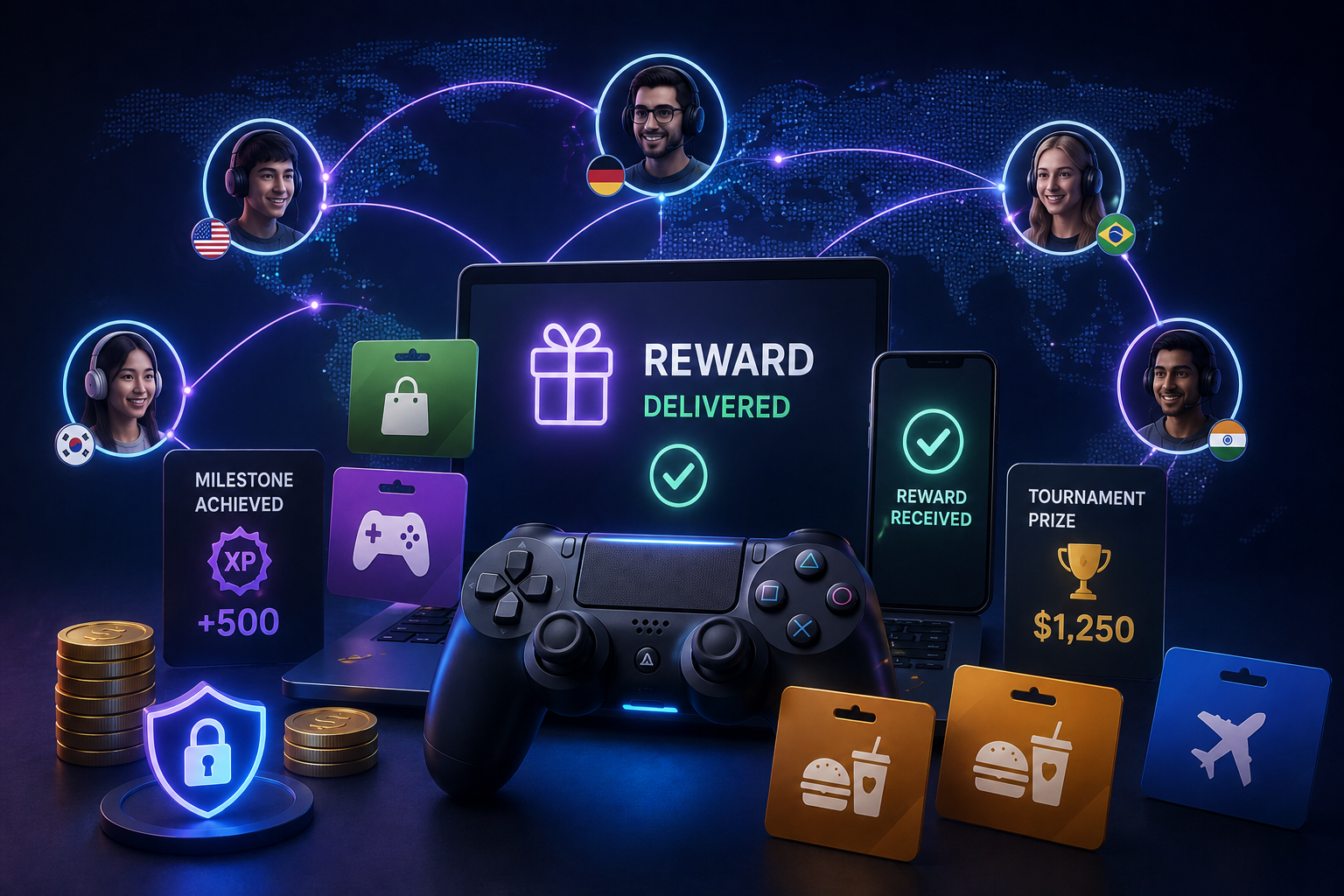
WINK by Wincube Global operates the gift card infrastructure layer that gaming and esports platforms plug into when they decide a reward doesn't need to be a banking problem. Wincube Global has processed over USD 220 million in gift card GMV in 2025 across a catalog of more than 30,000 gift cards spanning over 90 countries, giving reward and product teams a single integration point for players wherever they're located, without adding a licensing project to the roadmap.
If your platform is weighing how to settle retention rewards, tournament prizes, or milestone bonuses across a growing player base, it's worth mapping which of those reward types actually need a cash rail and which ones a global gift card catalog could handle today. No pressure either way, but if it's useful to see what that catalog and integration path actually look like, we're happy to walk through it.
Do gift card rewards count as taxable income for players the same way cash prizes do? Tax treatment varies by jurisdiction and reward type, and platforms should confirm specifics with local counsel, but the closed-loop nature of a gift card is often a meaningfully different starting point than a cash payout, which is one reason platforms separate reward categories rather than applying one tax approach to everything.
Can a gaming platform use a gift card API for some rewards and an in-house wallet for others? Yes, this is a common pattern. Retention and milestone rewards frequently move through a gift card API for speed and global reach, while cash prize obligations tied to real-money tournaments stay on a bank or licensed payout rail.
How fast can a gift card reward actually reach a player compared to a bank transfer? Well-integrated gift card APIs typically deliver rewards within seconds of the API call, compared to bank transfers that can take one to several business days depending on the destination country and rail.
Sources
If this is relevant to your team, Contact Us and we can walk through what it would look like.