Digital Gift Cards
Global Gift Cards
CROSS BORDER GIFTCARD
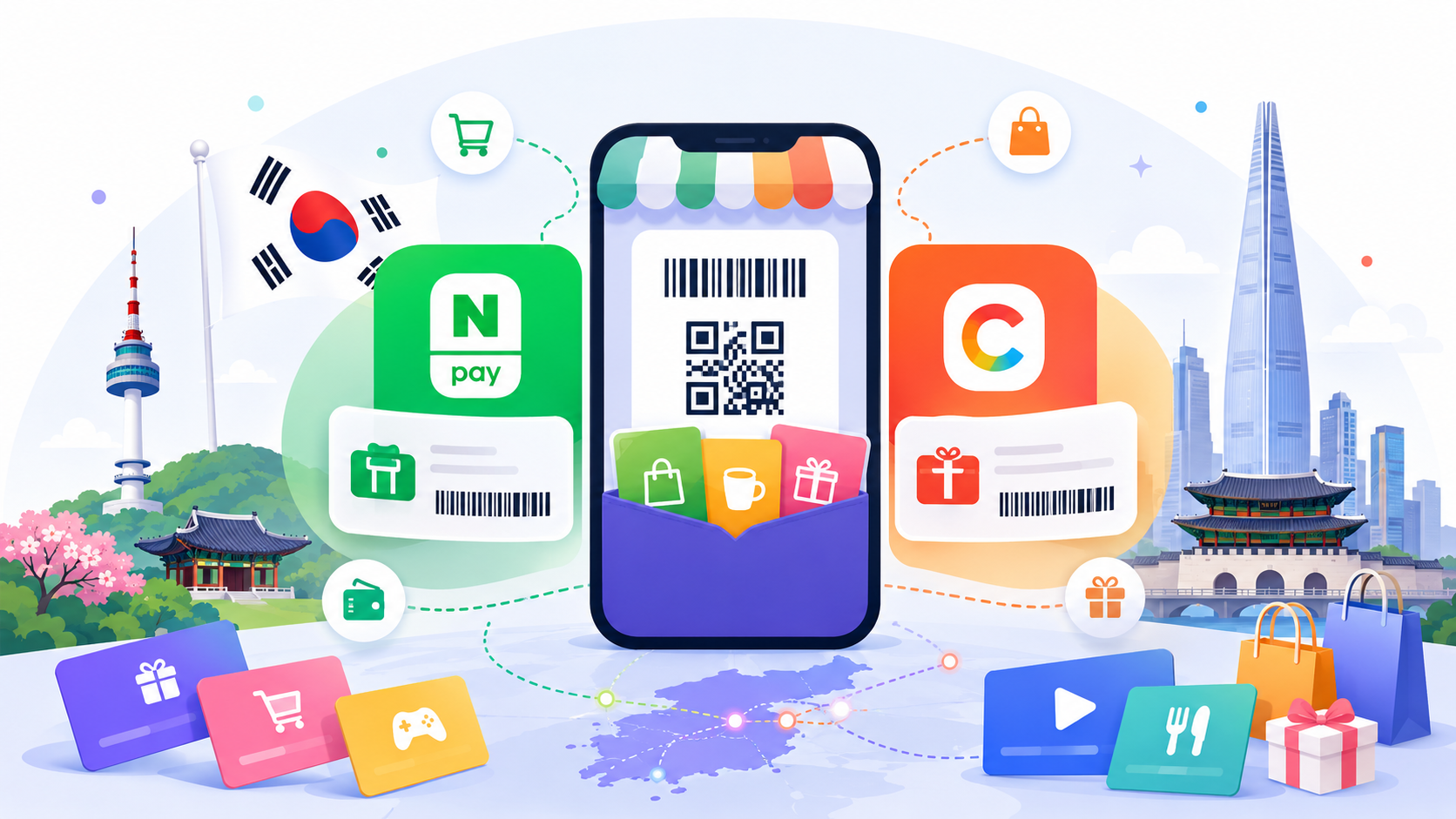

Korean recipients are 51.7 million potential reward earners — and most global rewards platforms cannot reach them effectively. When a research panel in Seoul, a Korean employee at a multinational firm, or a Korean consumer loyalty member needs a reward, platforms that cover 90+ countries but lack the local catalog still fail. Korea's gift card market hit $7.56 billion in 2025 and is dominated by brands your recipients actually use: Naver Pay, Coupang, Olive Young, Baemin, and Culture Land.
A Korean gift card API closes that gap — automatically, at scale, without requiring a dedicated local vendor relationship or a Korea-specific procurement team. This guide covers what that integration involves, which brands drive the highest redemption rates, and how to evaluate providers that go deeper than checking "Korea" off a country list.
📌 TL;DR
A Korean gift card API is a programmatic interface that enables a rewards platform to trigger the creation, delivery, and tracking of Korean digital gift cards in real time — without manual intervention. When a defined event occurs inside the platform — survey completed, recognition milestone hit, customer loyalty threshold reached — the API issues and delivers the corresponding reward automatically.
For global rewards platforms, this capability matters for one concrete reason: Korean recipients want Korean brands. A platform that offers Amazon, iTunes, and a generic prepaid Visa has almost nothing of practical value to offer a recipient in Seoul. Naver Pay topped 64.7% mobile payment usage in South Korea, with users citing reward points as the primary reason for choosing the platform (Korea JoongAng Daily). Coupang — Korea's dominant e-commerce platform — and Olive Young, the country's leading health and beauty retailer with 1,300+ stores nationwide, carry the same local relevance. An API connected to these brands transforms a foreign rewards platform into one that genuinely serves Korean users.
The global digital gift card market grew from $581.38 billion in 2025 to $680.35 billion in 2026, at a CAGR of 17.0% (The Business Research Company). Within this expansion, South Korea is a standout growth market: Korea's gift card market grew at a 9.7% CAGR from 2020 to 2024 (ResearchAndMarkets) — one of the highest rates globally — fueled by the rapid shift from physical to digital formats and the deepening integration of gift cards into mobile super-apps.
Three platform types use Korean gift card APIs most actively. Survey and research panels need local incentives to drive Korean respondent participation — digital gift card incentives can meaningfully increase survey response rates compared to non-incentivized surveys. Employee recognition platforms need Korean retail options for multinational workforces with Korean employees. Loyalty and fintech programs serving Korean users need brand-specific redemption paths that match how Korean consumers actually spend.
All three face the same core problem: a rewards catalog built for Western markets fails Korean recipients. A Korean gift card API solves that at the infrastructure level. The operational case for API-based issuance over manual procurement is equally clear: event-driven automation eliminates the stock shortfalls, delayed deliveries, and per-reward labor costs that define manual workflows — allowing programs to scale from hundreds to millions of Korean rewards without adding headcount.
Most Western markets operate with a short list of dominant gift card brands — Amazon, Visa, and a handful of major retailers. Korea's gift card ecosystem is structurally different in three ways: platform integration depth, brand fragmentation across verticals, and a digital-first infrastructure that has largely replaced physical formats.
Platform integration: Korean consumers don't just receive gift cards — they redeem them inside mobile super-apps. Naver Pay and Kakao Pay function as commerce, payment, and loyalty hubs where gift cards are stored alongside payment credentials and points. A gift card that lands in a Naver Pay wallet is immediately spendable across Naver's shopping ecosystem, thousands of affiliated merchants, and content subscriptions. The South Korea Gift Card Business Report 2026 (GlobeNewswire, February 2026) confirmed that the market is now "led by Kakao Pay and Naver Pay as ecosystem-embedded digital cards drive adoption" — platform-native gift cards now dominate over standalone physical formats.
Brand fragmentation: Korea has distinct gift card categories across multiple retail verticals — department stores (Shinsegae, Lotte, Hyundai), e-commerce (Coupang, Gmarket), food delivery (Baemin, Yogiyo), coffee (Starbucks Korea, Twosome Place), health and beauty (Olive Young), and convenience stores (GS25, CU). Each carries distinct value for recipients depending on age group, lifestyle, and region. A research panel running nationally representative surveys needs multiple of these brand categories, not just one.
Digital-first infrastructure: Korea has one of the world's highest smartphone penetration rates, and digital gift card adoption has outpaced physical formats at a pace Western markets have not matched. The South Korean gift card market grew at a 9.7% CAGR from 2020 to 2024, reaching $7.56 billion in 2025 and projected to reach $10.07 billion by 2029 at a 7.4% CAGR (ResearchAndMarkets). The transition from paper and plastic to e-gift and app-integrated formats is nearly complete across urban Korean consumer segments.
What this means for a global platform: adding "Korea" as a supported country without building the local catalog is a checkbox, not a solution. The platforms that win Korean recipient satisfaction are those that go deep on the local catalog — covering Naver Pay, Coupang, Baemin, Olive Young, and their peers — not those that lead with a country-count headline while delivering international brands that offer a poor redemption experience for Korean users.
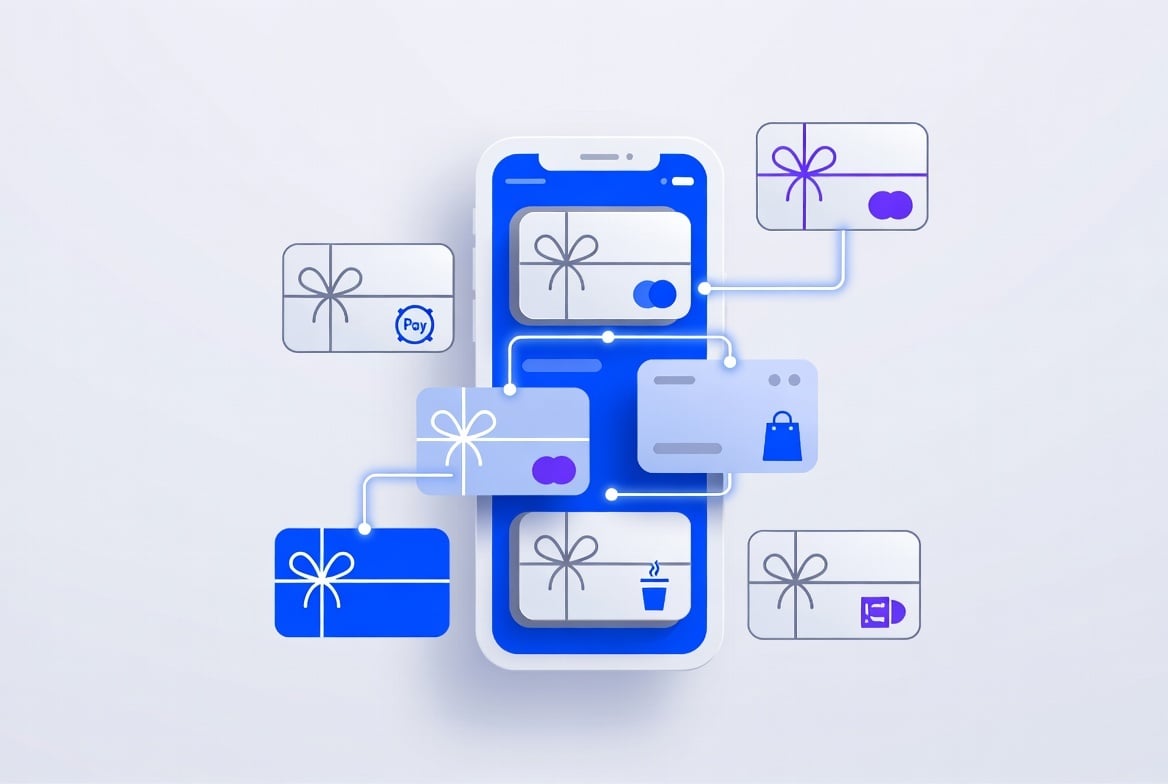
Before integrating a Korean gift card API, the key question is catalog selection: which brands generate the highest redemption rates, and for which recipient segments? Korean preference divides clearly by daily use case and demographic group.
For daily spending: Coupang gift cards dominate for e-commerce. Coupang is Korea's largest online retailer, covering groceries, electronics, fashion, and same-day delivery. Baemin (배달의민족) gift cards serve the food delivery market — Korea processes more food delivery orders per capita than nearly any comparable market, and a Baemin voucher delivers immediate utility to any recipient who orders meals regularly. GS25 and CU convenience store gift cards function as true all-purpose options given the density of convenience stores in Korean cities.
For lifestyle and wellness: Olive Young gift cards are the top choice for health, beauty, and personal care. Olive Young operates 1,300+ stores nationwide and serves the Korean equivalent of a Sephora-plus-pharmacy use case — one of the most-requested reward choices among Korean recipients aged 20 to 40, the core demographic for employee recognition and research panel programs.
For digital ecosystems: Naver Pay gift cards integrate directly into Korea's most-used search and shopping platform, reaching the broadest demographic. Kakao gifts function through KakaoTalk, which carries 96%+ penetration among Korean smartphone users. Both are particularly effective for survey panel incentives where digital delivery and instant redemption are non-negotiable requirements.
For high-value recognition: Shinsegae, Lotte, and Hyundai department store gift cards carry prestige signal — the Korean equivalent of a Nordstrom or Harrods gift card. These are the standard choice for employee service anniversaries, executive gifts, and high-value client appreciation. Culture Land gift cards work across bookstores, cultural venues, and online content platforms, making them effective for education-sector and professional audience incentive programs.
The practical implication for catalog design: a Korean gift card API exposing at minimum 8–12 local brands delivers the depth that drives recipient satisfaction across demographic groups. A short list of 2–3 Korean options fails to serve a nationally representative survey panel, a diverse employee workforce, or a loyalty program spanning multiple consumer segments. Recipient-side choice — the ability to select the brand most relevant to their lifestyle — is a measurable driver of incentive conversion rate, with localized choice consistently outperforming single-brand or generic-card options.
Integrating a Korean gift card API follows the same core architecture as any digital reward API, with Korea-specific considerations around KRW denomination handling, delivery channels, and catalog management frequency.
The basic integration flow:
The platform authenticates to the API using a token or API key, with IP allowlisting available for enterprise accounts.
A reward event is triggered — survey completed, goal reached, milestone hit, or loyalty threshold crossed.
The platform sends a request specifying: brand, denomination in KRW (or a USD equivalent the API maps to the nearest KRW denomination), recipient identifier (email or phone), and an optional delivery message.
The API creates the gift card, dispatches it to the recipient via email or SMS, and returns a delivery confirmation and tracking ID.
The platform receives a webhook callback confirming delivery status — or polls for status on demand.
KRW denomination handling: Unlike USD-based catalogs where gift cards come in fixed denominations ($10, $25, $50), Korean gift cards issue in KRW increments — typically ₩5,000, ₩10,000, ₩30,000, and ₩50,000. A well-designed API handles currency conversion and denomination selection transparently: the platform specifies a USD value, and the API issues the nearest available KRW denomination. This removes denomination mismatch as an operational failure mode in the issuance flow.
Delivery methods: Most Korean digital gift cards deliver via email or SMS as a PIN or URL code, or directly into the recipient's app wallet (Naver Pay, Kakao). Real-time delivery for email and SMS is standard. App-wallet delivery depends on the specific brand's integration with the provider.
Catalog management: Korean gift card brands update availability, denominations, and redemption instructions more frequently than many Western brands. A production-grade API provider manages catalog updates server-side, so the integrating platform never needs to modify its own code to reflect a denomination or availability change. This is a key evaluation criterion: ask providers how frequently catalog updates are pushed and whether update-related downtime is possible.
Integration timeline: A developer-led integration typically completes in 2–4 weeks, depending on the platform's existing reward infrastructure and the provider's documentation quality. The global employee recognition and rewards platform market is valued at $1.13 billion in 2026 (ResearchAndMarkets), growing at 10.24% annually — competition among platforms means documentation quality and integration speed are now selection criteria, not afterthoughts. A sandbox environment for testing without consuming live card inventory is the correct starting point for any new integration.
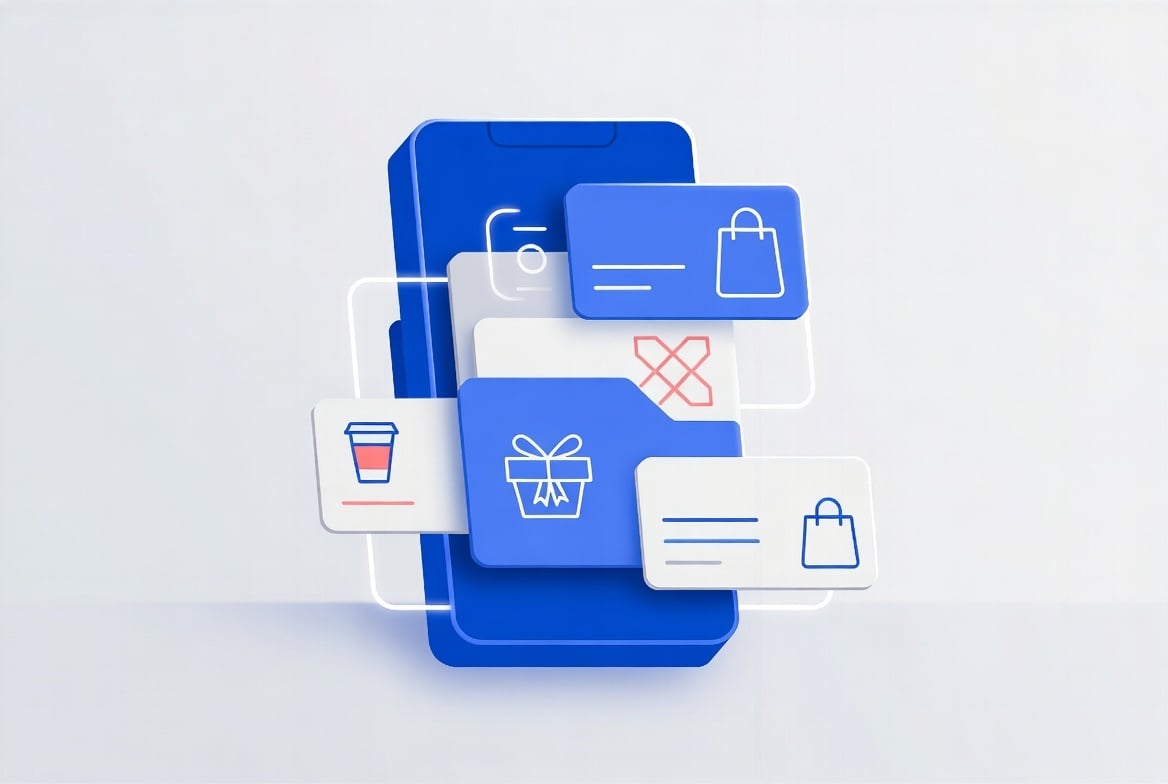
Not every global platform runs on event-driven triggers. Two delivery models exist, and choosing between them depends on the platform's operational structure and reward cadence.
Real-time API integration is the right model when:
The platform triggers rewards based on user events — survey completion, goal achievement, transaction milestone, or loyalty threshold crossed
Delivery within seconds or minutes of the trigger event is required for recipient experience quality
Reward volume is variable or unpredictable — thousands per day in peak periods, hundreds in slow periods
Per-recipient tracking is required: each user receives exactly their earned reward, recorded individually for reporting and compliance
With real-time API, the catalog lives server-side at the provider. The platform integrates once, and all future catalog updates, delivery mechanics, and reporting infrastructure are managed by the provider. This eliminates the per-reward operational overhead of manual workflows and enables programs to scale without adding headcount.
Bulk fulfillment is the right model when:
Rewards are distributed in planned batches — quarterly employee recognition cycles, end-of-study respondent payments, or annual client gifting campaigns
Volume is high and predictable: hundreds or thousands of gift cards ordered in a single purchase event
Finance team approval or a consolidated purchase order is required before issuance begins
Recipients don't need to be reached through the platform's interface — batch delivery via email is sufficient
Bulk fulfillment suits HR teams running annual recognition events, research operations teams paying out Korean respondents at the end of a study, and marketing teams distributing gifts post-campaign. The model is straightforward: submit an order file specifying brands, KRW denominations, volumes, and recipient identifiers; the provider handles delivery and returns confirmation.
The practical test: if rewards are a recurring, automated workflow embedded in the product, real-time API is the correct investment. If rewards are periodic and finance-approved, bulk fulfillment costs less to set up and manage. Many enterprise platforms use both: API integration for ongoing automated programs and bulk fulfillment for large one-time distributions. A provider supporting both models through a single relationship eliminates the vendor complexity of managing separate Korean and global reward suppliers — a meaningful operational advantage for multinational programs running across multiple regions simultaneously.
Sending gift cards to Korean recipients involves compliance considerations that differ from Western markets — specifically around personal data handling, tax treatment of corporate incentives, and technical security standards.
PIPA (Personal Information Protection Act): Korea's PIPA governs how personal data — including recipient email addresses, phone numbers, and transaction records — is collected, stored, and processed. For a global platform sending gift cards to Korean users, the central question is whether recipient data is transferred outside Korea. PIPA imposes consent requirements and data localization considerations that affect how the API handles recipient PII. Working with a provider that processes Korean recipient data within PIPA-compliant infrastructure reduces the regulatory burden on the integrating platform.
Gift card tax treatment: In Korea, corporate-issued gift cards above certain value thresholds carry tax reporting considerations for the issuing entity. Platforms that track issuance amounts per recipient per year — by brand and KRW value — support the reporting obligations that Korean corporate clients need. Per-recipient issuance records, exportable by date range, are a procurement criterion for enterprise buyers.
Fraud and abuse controls: Gift card fraud — code scraping, velocity-based abuse, and fake survey completions — is a persistent problem in high-value digital redemption markets. A production-grade Korean gift card API includes rate limiting, delivery via authenticated channels rather than plaintext URL exposure, and full issuance logging for audit purposes.
Technical requirements checklist:
HTTPS-only endpoints with TLS 1.2 or higher
OAuth 2.0 or API key authentication, with IP allowlisting for enterprise accounts
Idempotency keys to prevent duplicate issuance from network retries
Webhook signature verification to confirm delivery callbacks are legitimate
Sandbox environment for integration testing without consuming live card inventory
English-language documentation — a non-negotiable requirement for any global platform's development team integrating a Korean provider
The rewards and incentives service market is valued at $6.52 billion in 2026 and growing at 8.9% annually (BusinessResearchInsights). As more platforms operate under GDPR, CCPA, and PIPA simultaneously, compliance capability at the API layer is a procurement criterion for enterprise buyers — not an optional feature evaluated after vendor selection.
Most global gift card API providers lead with country coverage as their headline metric: "Send rewards to 100+ countries." For a platform trying to serve Korean recipients well, this number is nearly meaningless.
Country coverage counts typically include "Korea" as soon as a provider offers one or two internationally recognized brands redeemable there — an Amazon gift card, an iTunes card, or a Visa prepaid. These are catalog fillers for Korean recipients. A Korean respondent completing a 20-minute survey does not want an Amazon gift card that requires a U.S.-linked account for full redemption. They want Coupang, Naver Pay, or Olive Young — brands integrated into their daily digital life in ways that generic international cards are not.
The right metric is local brand count within the target market. For Korea:
3–5 Korean brands covers major use cases at a baseline level — Naver Pay, Coupang, and a few others
8–12 Korean brands covers the full recipient demographic: daily-spend earners (Coupang, Baemin), lifestyle redeemers (Olive Young), ecosystem users (Naver Pay, Kakao), and prestige recipients (Shinsegae, Lotte)
15+ Korean brands including department stores, telecom, and specialty retail covers enterprise-grade programs serving diverse Korean workforces and customer bases
Catalog freshness matters equally. Korean brands update denomination structures, add co-branded promotions, and occasionally suspend gift card programs. A provider that launched 5 Korean brands and never updated them creates recipient failures: codes that fail at redemption, brands that no longer accept the denomination, or delivery methods that have changed. Catalog maintenance is an ongoing operational responsibility, not a one-time setup task.
The global rewards and incentives service market is projected to reach $12.99 billion by 2035 (BusinessResearchInsights), and platforms competing for enterprise contracts are increasingly evaluated on local catalog depth — not global coverage count. An RFP from a multinational with 2,000 Korean employees does not ask "how many countries?" It asks "which brands in Korea, and how fast can you deliver?"
The due diligence question when evaluating any Korean gift card API provider: request the full Korean catalog list, confirm when each brand was last verified active, and ask for the typical time between a brand update and the provider's catalog refresh. That answer reveals actual depth — not marketing copy.
Wincube has operated in Korea since 2011 — 15 years of direct relationships with Korean gift card brands, domestic retailers, and the payment infrastructure that underpins Korean digital rewards. That market presence translates into catalog access that generalist providers cannot replicate by simply adding "Korea" to a coverage map.
In 2025, Wincube processed USD 220 million in gift card GMV across its global and Korean catalogs. The Korean catalog includes the brands Korean recipients actually use — Naver Pay, Coupang, Baemin, Olive Young, Culture Land, Shinsegae, and more — not a short list of international brands nominally redeemable in Korea. The global catalog simultaneously covers 30,000+ gift cards across 90+ countries, which means a rewards platform integrating with Wincube gains Korean catalog depth and international reach through a single API connection and a single commercial relationship.
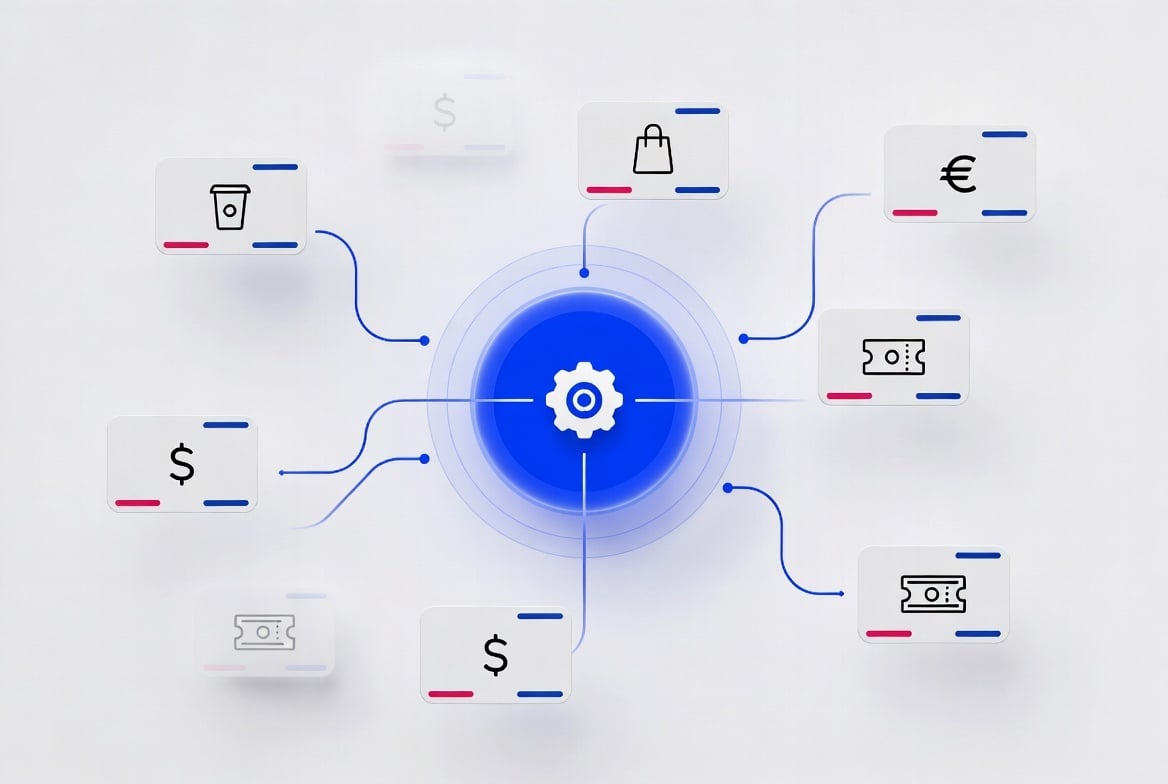
Two delivery models are available depending on program structure. For event-driven reward programs — survey completions, recognition milestones, loyalty thresholds — real-time API integration issues Korean gift cards within seconds of the trigger event, with no human in the loop. For large planned distributions, bulk fulfillment handles enterprise-scale Korean gift card orders in a single coordinated operation. Platforms with both program types manage them through one Wincube relationship, eliminating the vendor complexity of maintaining separate Korean and global reward suppliers.
Wincube's U.S. branch in Delaware gives global platforms a direct, English-language commercial relationship backed by 15 years of Korean market operation. There is no requirement to navigate a Korean-only vendor relationship, manage KRW conversion independently, or source Korean brands through multiple regional intermediaries. Wincube Global is the single integration point for platforms that need both Korean catalog depth and international reach — covering the Americas, Europe, APAC, and Korea's domestic market through one connection.
If this is relevant to your team, Contact Us and we can walk through what it would look like.
Wincube's Korean catalog includes major domestic brands that Korean recipients use daily, including Naver Pay, Coupang, Baemin (배달의민족), Olive Young, Culture Land, and Shinsegae. The catalog covers the full range of recipient use cases — daily spending, food delivery, lifestyle and wellness, prestige recognition, and digital ecosystems — across the Korean market.
A developer-led integration typically completes in 2–4 weeks, depending on the platform's existing reward infrastructure and the provider's documentation quality. A sandbox environment for integration testing without consuming live card inventory is the standard starting point. Platforms with existing reward API infrastructure often complete the Korean gift card integration faster, as the core authentication and webhook patterns are already in place.
Yes. A well-designed Korean gift card API handles currency conversion transparently: the platform specifies a USD value, and the API maps it to the nearest available KRW denomination. Invoicing and settlement for global platforms operating in USD is standard for providers with international commercial infrastructure. Denomination mismatch — where a USD value does not align cleanly with available KRW increments — is handled automatically at the API layer.
Real-time API integration issues gift cards automatically when a defined event occurs — survey completion, goal achievement, or loyalty milestone — delivering to the recipient within seconds. Bulk fulfillment handles large, planned distributions submitted as an order with brand, denomination, volume, and recipient details specified upfront. Real-time API suits ongoing automated programs; bulk fulfillment suits quarterly or one-time large-scale distributions. Many enterprise platforms use both for different program types within the same Korean recipient base.
Yes. Wincube's dual catalog model covers Korean brands (Naver Pay, Coupang, Baemin, Olive Young, Culture Land, and more) alongside international brands (Starbucks, Amazon, Walmart, DoorDash, Uber, Visa, Mastercard, Google Play, and others) through a single API connection. A platform integrating with Wincube gains Korean catalog depth and global reach without managing separate regional suppliers — the key operational advantage for multinational rewards programs running across multiple countries simultaneously.
Korea's Personal Information Protection Act (PIPA) governs recipient data handling, including email addresses and phone numbers used for gift card delivery. Corporate-issued gift cards above certain value thresholds carry tax reporting considerations for Korean corporate clients. A production-grade Korean gift card API includes PIPA-compliant data handling, per-recipient issuance records, rate limiting, and full audit logging. These are evaluation criteria at vendor selection — not features to confirm after contract signing.
The South Korean gift card market is a $7.56 billion opportunity in 2025, growing to over $10 billion by 2029 — and it is not well-served by global platforms that treat Korea as a checkbox rather than a core market. Korean recipients want Korean brands: Naver Pay, Coupang, Baemin, Olive Young, and their peers. A rewards program that delivers genuine local choice outperforms one offering generic international fillers every time.
The path to Korean gift card capability is clearest when the provider brings three things: deep Korean catalog coverage (not just country-count marketing), proven delivery infrastructure that handles KRW denominations and PIPA compliance, and a commercial structure built for global platforms operating in USD.
Wincube delivers all three. Operating since 2011, processing USD 220 million in gift card GMV in 2025, covering 30,000+ gift cards across 90+ countries, with a Korean catalog built on 15 years of direct brand relationships — Wincube is the infrastructure layer for global platforms that need to reward Korean recipients at scale. Real-time API integration and bulk fulfillment serve every program type, from event-driven automated rewards to large annual distributions.
Related reading: How Global Buyers Add Korean Gift Cards to Their Rewards Catalog: A Practical Guide · What Is a Bulk Gift Card API and Why Platforms Are Adopting One
To explore a Korean gift card API integration for your platform, contact the Wincube team directly. The conversation starts with your catalog requirements, program scale, and delivery model — no gatekeeping, just a direct discussion with the team that has served the Korean market for over 15 years.
Contact Email : win-obdteam@wincubemkt.com