Digital Gift Cards
Global Gift Cards
CROSS BORDER GIFTCARD
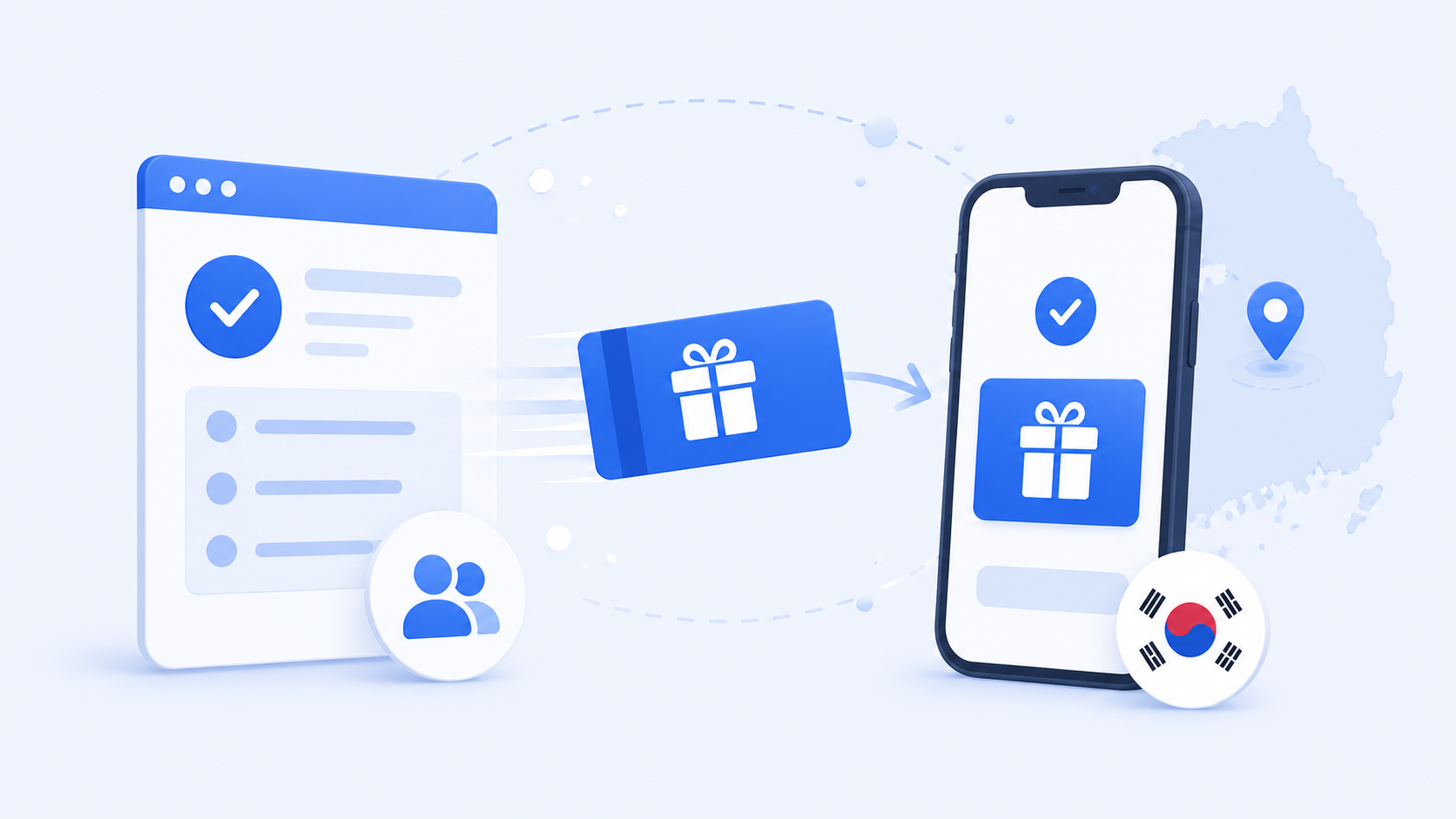

Running a research panel study with South Korean respondents sounds straightforward—until you discover that standard global incentive tools fail in this market. PayPal has limited consumer adoption in Korea. Amazon gift cards are technically redeemable but carry low perceived value for Korean respondents. Wire transfers cost $25–$50 per transaction and arrive 2–5 business days later, by which time your respondent has moved on to the next panel.
The answer is direct: deliver locally preferred digital gift cards—Naver Pay, Coupang, Baemin, Culture Land, or Olive Young—instantly to respondents' email or phone. Research panels that use properly localized incentives tend to see meaningfully higher response rates compared to panels that default to generic global rewards. This guide covers which brands to choose, how much to pay, how to deliver at scale, and how to stay compliant as a foreign entity paying Korean residents.
📌 TL;DR
Survey incentives are rewards given to participants in exchange for completing a study. They increase response rates, reduce dropout before completion, and improve data quality by attracting more representative samples. In South Korea, the type of incentive matters as much as the amount—choosing the wrong type undermines both response rates and data integrity simultaneously.
South Korea operates one of the world's most advanced digital payment ecosystems. The domestic gift card market reached $7.46 billion in 2025 and is forecast to grow at a CAGR of 7.2% to reach $10.60 billion by 2030 (GlobeNewswire, 2026). Platforms like Naver Pay and Kakao Pay are not just payment wallets—they are embedded lifestyle ecosystems where Koreans shop for groceries, pay utility bills, stream entertainment, and send gifts to friends. A Naver Pay gift card lands inside the same app a respondent opens dozens of times each week.
By contrast, a $10 Amazon US gift card creates meaningful friction. The Korean recipient accesses a separate platform, encounters potential regional pricing differences, and feels less rewarded for their time. This friction translates directly into lower completion rates and higher mid-survey abandonment.
South Korea has one of the world’s most digitally mature smartphone populations. The population expects instant digital fulfillment—physical vouchers and mailed checks are not a viable incentive strategy in a market this digitally mature. For research panels targeting Korean consumers in CPG, tech, beauty, finance, and entertainment verticals, incentive localization is the single highest-leverage variable in study quality and quota speed.
The underlying data supports this urgency: incentivized participants are meaningfully more likely to complete a survey than non-incentivized participants. In a competitive panel landscape where Korean research-worthy demographics are in high demand, that completion rate differential determines whether a study hits quota on schedule or runs over budget on fieldwork extensions.
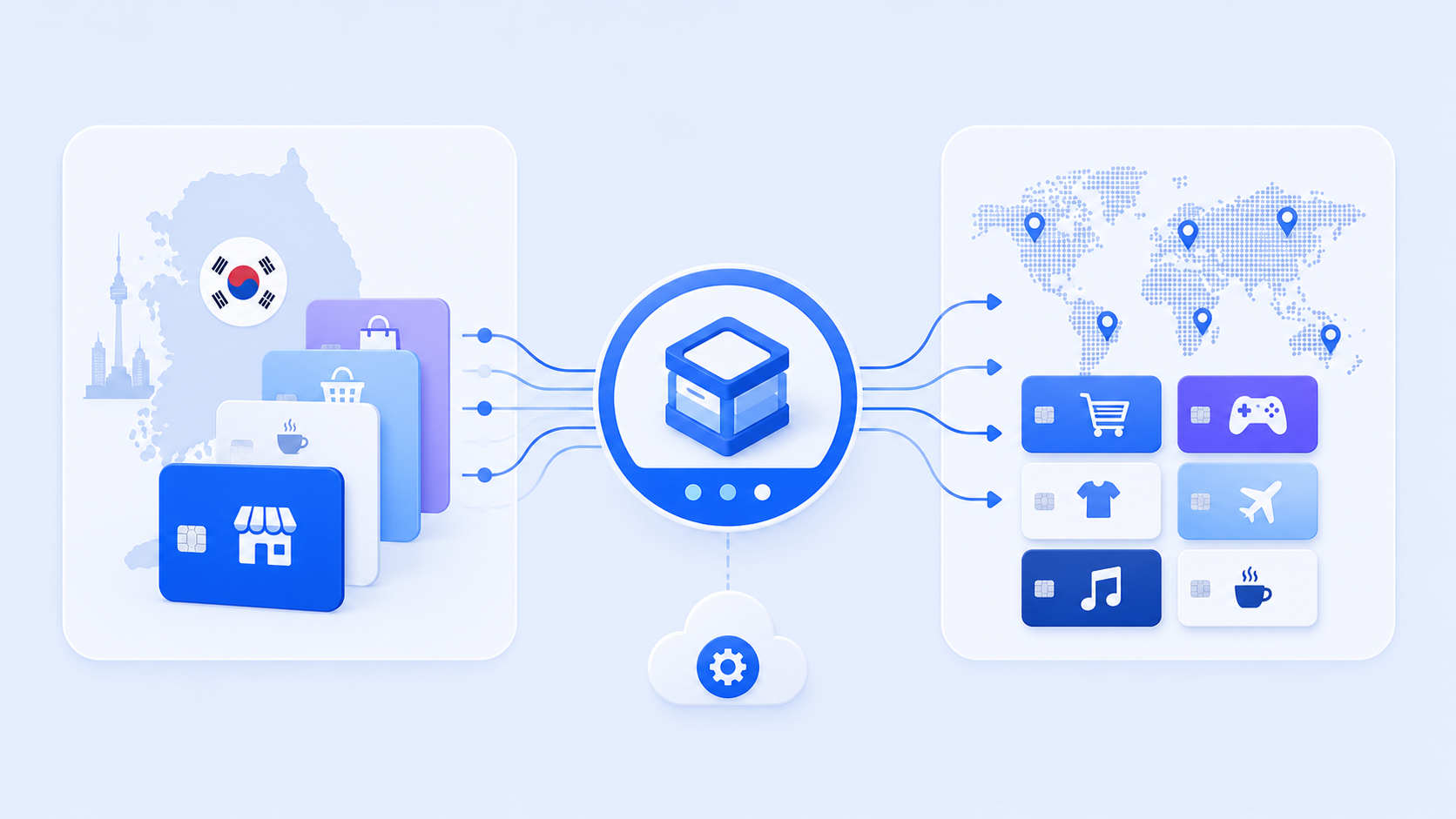
Korean respondents respond best to gift cards from brands embedded in their daily routines. Here are the eight brands that perform consistently in B2B research panel contexts, covering the full range of category verticals.
Naver Pay — South Korea's dominant search and commerce platform. A Naver Pay gift card is spendable across thousands of affiliated merchants, making it the most versatile domestic option. Naver's shopping tab engages over 14 million monthly users—respondents already have the app installed and the account linked.
Coupang — South Korea's largest e-commerce platform, frequently described as "South Korea's Amazon." Coupang Rocket Delivery is a point of national pride: orders placed before midnight arrive by 7 a.m. A Coupang gift card signals to respondents that their reward is immediately useful and frictionless to redeem.
Baedal Minjok (배달의민족) — South Korea's top food delivery app. For urban respondents in Seoul, Busan, and Incheon, a Baemin gift card addresses a daily spending habit and carries high perceived value relative to its face amount. It is a consistent top-three performer for incentive programs targeting 25–45 year-olds.
Culture Land (컬쳐랜드) — Redeemable at cinemas, bookstores, and educational platforms. The preferred choice for academic, education-sector, and family-focused research panels targeting younger demographics and parents.
Olive Young — South Korea's dominant health and beauty retailer with over 1,300 stores nationwide. Consistently high preference among female respondents aged 18–45, a core demographic for beauty, FMCG, and wellness research studies.
Emart / Shinsegae — Large-format retail chains. Gift cards here perform best for household goods, grocery-category research, and lifestyle studies where respondents associate the reward directly with their weekly shopping routines.
Starbucks Korea — High perceived value, universally recognized, and available in thousands of Korean locations. Starbucks gift cards work especially well for short 5–10 minute surveys where a small but premium reward resonates more than a larger generic option.
Google Play — Strong for tech, gaming, and youth-demographic research. Google Play is widely used in Korea among respondents aged 18–34, making it the right choice for panels targeting digital natives, mobile gamers, and early tech adopters.
Best practice: offer respondents a choice of 3–5 local options rather than a single forced brand. Choice increases perceived flexibility and drives completion rates measurably higher. The South Korean gift card market grew at a CAGR of 8.2% between 2021 and 2025 (Research and Markets, 2025)—these are not niche platforms. They are how Korea shops, eats, entertains, and transfers value.
Respondent compensation in South Korea follows the same time-value logic as other markets, with one critical adjustment: low incentives do not just reduce response rates—they skew your sample toward respondents with high free time and low income, distorting your data before analysis begins. Korean respondents in target demographics know what their time is worth.
Industry benchmarks for 2025 (UserInterviews; Giftogram):
5–10 minute survey: $5–$15 USD equivalent (₩6,500–₩19,500)
15–20 minute survey: $15–$30 USD equivalent (₩19,500–₩39,000)
30+ minute survey or in-depth interview: $40–$75 USD equivalent (₩52,000–₩97,500)
Diary study or multi-session research: $75–$150 USD equivalent (₩97,500–₩195,000)
A 2024 study published in JMIR Formative Research confirmed that a $15 gift card produced completions more than twice as fast as a $5 incentive for an identical online survey. For Korean panels specifically, under-incentivizing compounds across study waves—longitudinal research panels feel this acutely when wave-two response rates drop among respondents who felt undercompensated in wave one.
The practical rule: budget at least ₩1,000 (approximately $0.75 USD) per minute of survey length, then adjust upward for specialized or hard-to-reach demographics. B2B respondents—managers, C-suite executives, medical professionals, IT decision-makers—command 2–3× the standard consumer rate. High-income consumer segments in Seoul's Gangnam, Seocho, and Mapo districts carry the same expectation.
One FX consideration that panels consistently overlook: set your incentive budget in KRW, not USD. An amount that felt appropriate at a 1,300:1 exchange rate feels materially lighter at 1,430:1—a 10% real cut to the respondent's reward with no corresponding reduction in survey length. Working with a fulfillment provider that issues gift cards denominated in KRW at the time of delivery eliminates currency risk from your incentive program entirely.
Delivery method determines whether an incentive feels like a reward or a chore. For South Korean respondents, instant digital fulfillment is not a premium feature—it is the baseline expectation. Here are the viable delivery approaches, ranked by scalability.
1. Real-time API integration — the gold standard for high-volume panels. When a respondent completes a survey, an API call triggers instant gift card delivery to their email. The card arrives within seconds of form submission—no manual processing, no batch delays, no support tickets about missing rewards. Research panels running 5,000+ completions per quarter require this infrastructure to remain operationally viable.
2. Bulk pre-purchase and batch distribution — the right choice for panels with predictable volume. Purchase a block of gift card codes in advance, then distribute through your survey tool's built-in reward flow. Monthly tracker studies, academic longitudinal surveys, and annual brand health waves fit this model well. Bulk fulfillment typically offers cost advantages over per-call API pricing at high volume.
3. Email delivery to Korean inboxes — the most compatible method for existing panel infrastructure. A digital gift card link delivered to the respondent's email is redeemable from the same device used to complete the survey. Korean respondents frequently use Naver Mail or Daum Mail as their primary addresses—confirm your delivery infrastructure handles these domains reliably, as Gmail-origin messages occasionally route to spam for these users.
4. KakaoTalk gifting — the highest perceived-value delivery option. KakaoTalk has 48 million monthly active users in South Korea (Kakao Corp., 2024)—effectively the entire adult population. Receiving a gift card via KakaoTalk feels personal and immediate. This method requires a Korean mobile number and Kakao gifting API integration, making it more complex to implement but significantly more resonant with recipients who see it as a gesture of appreciation rather than an automated system output.
Wire transfers are entirely the wrong tool for individual Korean respondent rewards. At $25–$50 per transaction and 2–5 business day delivery times, they create the exact experience that damages panel reputation: a respondent completes a demanding 20-minute survey and then waits three business days for compensation. The frustration is disproportionate to the delay. Instant delivery is not optional in the Korean research market.
Incentive distribution to Korean respondents from a foreign entity introduces four compliance layers that global research panels consistently underestimate before launching Korean fieldwork.
Currency and FX compliance: South Korea's Foreign Exchange Transactions Act (FETA) governs cross-border payments. Individual transfers below ₩3,000,000 (approximately $2,300 USD) per transaction are generally exempt from formal FX reporting, but aggregate payments across a study period to the same respondent warrant documentation. Issuing KRW-denominated gift cards through a Korean-market provider sidesteps the cross-border transaction framework entirely—no FX reporting obligation arises because no international currency transfer occurs.
Tax treatment of incentives: Research incentives paid to Korean residents are subject to Korean income tax when they exceed the annual non-taxable threshold (approximately ₩500,000 per income source). Single-wave panel surveys typically stay well below this threshold. Longitudinal studies with repeat respondents require participant-level tracking across waves. Gift cards issued as survey prizes or participation rewards are treated differently from employment income under Korean tax law in most cases—but document your program design and consult local counsel for studies with high per-respondent totals.
Personal Information Protection Act (PIPA): South Korea's PIPA governs how respondent data—including email addresses used for incentive delivery—is collected, stored, and transferred internationally. Foreign research panels collecting data in South Korea must ensure PIPA compliance when respondent data crosses borders. Working with a Seoul-headquartered fulfillment partner that processes delivery locally reduces cross-border data transfer exposure at the infrastructure level.
AML and OFAC screening: Enterprise-grade gift card providers maintain anti-money laundering and OFAC compliance checks on bulk reward distributions automatically. For research panels running high-volume Korean studies, this screening is built into the infrastructure layer of reputable B2B providers—not a manual process your operations team manages separately.
The simplest compliance path: work with a South Korean gift card provider that issues KRW-denominated cards natively, handles delivery locally, and supports PIPA-compliant data flows. One vendor relationship removes three of the four friction points simultaneously.
Incentives attract respondents—but poorly designed programs also attract bots, speeders, and professional panel participants who optimize for reward volume over response quality. The Korean research market is mature and sophisticated, and quality controls are non-negotiable for defensible data.
Embed attention checks in the questionnaire. Place 2–3 instructional manipulation checks within the survey body (e.g., "For quality control purposes, please select 'Strongly Disagree' for this item"). Screen out respondents who fail before reward issuance. Panels using at least two embedded attention checks have been shown to meaningfully reduce invalid responses.
Set minimum completion time thresholds. A 15-minute survey completed in under 4 minutes signals auto-clicking or random selection. Flag completions that fall below 40% of the median completion time for human review before reward triggers fire. Do not automate rewards for flagged responses—review first, pay second.
Limit repeat participation with deduplication logic. Use email fingerprinting and device ID matching to prevent the same respondent from taking a survey multiple times under different identities. Korean domestic survey-reward communities actively discuss strategies for maximizing completions per week. Your platform's deduplication layer is the first line of defense against gaming.
Tier incentives with engagement gates for complex research designs. For studies requiring high cognitive engagement—conjoint analysis, max-diff exercises, extensive open-ended responses—add a small completion bonus (₩5,000 additional) triggered only when responses meet a minimum engagement threshold: word count minimums on open-ends, response variation checks, or time-on-question floors. This separates genuinely engaged respondents from those gaming the incentive system.
Incentives and data quality are not in conflict. A ₩15,000 gift card with two attention checks and a completion-time floor produces better, more statistically defensible data than a ₩8,000 reward with no controls—and costs less in the long run when you account for the price of re-fielding a compromised study.
Many global rewards platforms advertise "90+ country coverage." South Korea appears on that list. But country coverage and local catalog depth are distinct capabilities—and confusing them is an expensive mistake for research panels building Korean fieldwork programs.
A platform that covers South Korea with three globally available brands—Amazon US, iTunes, Google Play—technically delivers a reward. The respondent can redeem it. But the perceived value compared to a Naver Pay or Coupang card is measurably lower, and your completion rates reflect the gap.
The behavioral economics are concrete: a Coupang gift card unlocks next-morning delivery on products the respondent was already planning to purchase this week. A Google Play card unlocks an app they downloaded once and rarely open. Both carry identical face value. The locally preferred option wins on utility, immediacy, and emotional resonance—all of which translate directly to higher completion rates and stronger panel sentiment scores across waves.
For research panels running longitudinal studies in Korea—repeat-wave surveys with the same respondents over months—incentive relevance compounds. Respondents who receive rewards they genuinely value participate in future waves at higher rates. A 2024 Tandfonline study on longitudinal mixed-mode surveys found that increasing incentive value and relevance for previous-wave non-respondents significantly improved retention in subsequent waves. In panel economics, respondent retention across waves is worth far more than the marginal cost of choosing a better gift card.
When evaluating a fulfillment partner for Korean research incentives, ask these specific questions:
How many South Korean brands does your catalog carry natively—not routed through a third-party aggregator?
Can you issue gift cards denominated in KRW at the time of delivery, not converted from USD at issuance?
What is the average delivery time for Korean recipients from API trigger to inbox arrival?
Do you support Naver Pay, Kakao ecosystem cards, and Coupang from a single integration?
The answers separate providers with genuine Korean market depth from those treating Korea as a checkbox on a global coverage map.
Wincube is a Seoul-headquartered B2B digital gift card aggregator operating since 2011, with a U.S. branch in Delaware. In 2025, Wincube processed USD 220 million in gift card GMV across 90+ countries, with a catalog of 30,000+ global gift cards and 100+ gift shops. For global research panels, the combination of Korean market roots and enterprise-scale international infrastructure is the core differentiator—not a trade-off between local expertise and global reach.
For research panel use cases, two capabilities matter above all others: catalog depth in the Korean market and delivery reliability at scale.
On catalog depth: Wincube's Korean catalog includes Naver Pay, Coupang, Baemin (배달의민족), Culture Land, Olive Young, Emart, Shinsegae, and additional domestic brands spanning food delivery, e-commerce, retail, beauty, and entertainment. These are the brands Korean respondents use daily—not global substitutes engineered to fill a country slot. For panels targeting Korean consumers across category verticals, that native catalog depth is the operational edge that generalist global platforms do not replicate.
On delivery model: Wincube supports real-time API integration and enterprise-scale bulk fulfillment. API integration connects directly with your panel platform or survey tool—when a respondent completes a survey, the trigger fires and the gift card arrives within seconds of form submission. Bulk fulfillment suits panels with predictable monthly or quarterly volume, allowing cost-efficient pre-purchase and code distribution through your existing workflow, whether that's a custom survey tool, a third-party panel platform, or a managed fieldwork partner.
For global research panels running simultaneous studies across multiple geographies, Wincube's 90+ country coverage means a single vendor relationship handles Korea alongside North America, Southeast Asia, and Europe—eliminating the operational complexity of managing separate regional suppliers for each study market. Wincube has operated in the Korean gift card market for over 14 years, predating the Naver Pay and Kakao Pay ecosystems themselves. That operational depth translates to established brand relationships, reliable card inventory availability, and institutional knowledge of Korean market nuances that newer entrants encounter as surprises mid-fieldwork.
Research panels ready to deliver Korean-market incentives at scale can reach the Wincube team.
If this is relevant to your team, Contact Us and we can walk through what it would look like.
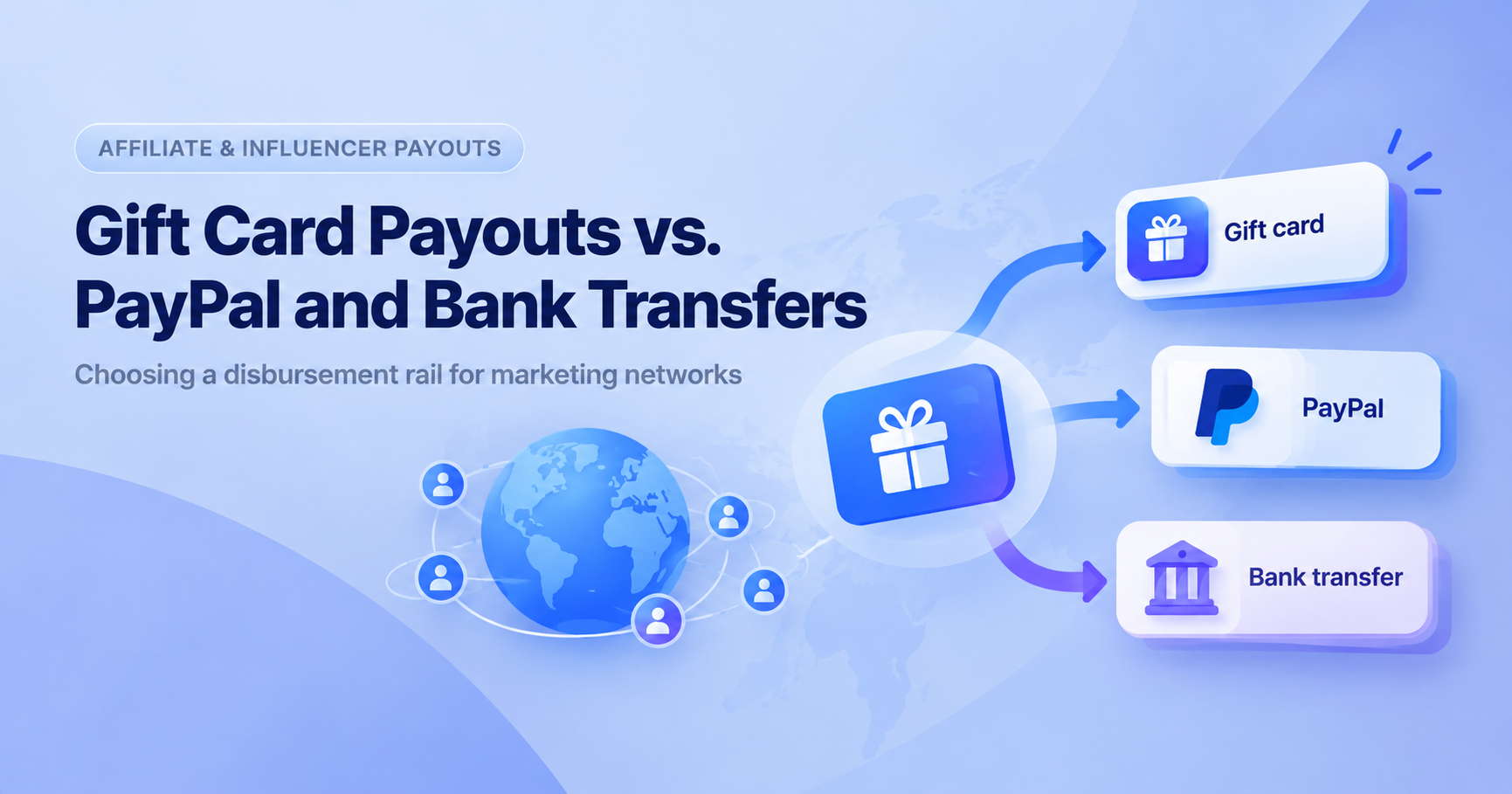
PayPal is technically available in South Korea but is not a preferred consumer payment method—Korean respondents use Naver Pay, Kakao Pay, and bank-linked domestic wallets for daily transactions. Bank wire transfers cost $25–$50 per transaction and take 2–5 business days, making them entirely unsuitable for individual respondent rewards. Digital gift cards in KRW are the correct tool: instant, locally relevant, and operationally scalable.
With real-time API integration, Korean respondents receive their gift card within seconds of survey completion via email. Batch distribution for bulk fulfillment programs is typically processed same-day. The expectation among Korean digital consumers is immediate fulfillment. Any delay beyond a few minutes warrants a proactive follow-up notification from your panel operations team—unacknowledged delays generate disproportionate support volume and erode panel reputation for future recruitment.
Digital gift cards are the preferred format, as confirmed by 2024 research (Giftogram; UserInterviews). Korean consumers are highly comfortable with digital wallet-based transactions through Naver Pay, Kakao Pay, and Coupang. Cash transfers introduce FX friction, processing delays, and bank account collection friction that digital cards eliminate. Prepaid Visa and Mastercard cards are a usable secondary option for respondents who request them, but they perform below domestic Korean brands in completion rate data from panel operators running Korean studies regularly.
Korean gift cards are generally available in fixed KRW denominations. Common values for survey incentive purposes range from ₩5,000 to ₩50,000 (approximately $3.50–$35 USD), with ₩10,000 and ₩20,000 being the most frequently requested for 10–20 minute survey programs. Specific denominations vary by brand and supplier—confirm available values with your fulfillment provider before finalizing your incentive budget and survey design.
First, confirm the delivery email address matches the respondent's active inbox. Korean respondents frequently use Naver Mail or Daum Mail as their primary address—messages originating from foreign email servers occasionally route to spam for these providers. If the card is confirmed as sent but not received, your fulfillment provider reissues a replacement code. Build a 48-hour resolution SLA into your Korean panel operations policy and include a follow-up email trigger at 24 hours for any unconfirmed deliveries.
This is precisely where a single multi-country fulfillment partner outperforms a patchwork of regional vendors. The South Korea catalog (Naver Pay, Coupang, Baemin, etc.) runs through the same API integration or bulk fulfillment workflow as the US catalog (Amazon, Starbucks, Visa prepaid), the European catalog, and APAC markets. One contract, one integration, one operations contact for all markets—no fieldwork delays caused by chasing approvals across four regional suppliers mid-study.
Sending incentives to South Korean survey respondents is not a logistics problem—it is a strategic decision that directly shapes data quality, panel reputation, and study ROI. The panels that consistently succeed in Korea share three practices: they deliver local brands rather than global substitutes, they pay at least ₩1,000 per minute of respondent time, and they use instant digital delivery via API or structured bulk fulfillment.
The Korean gift card market is forecast to grow at a CAGR of 7.2% and reach $10.60 billion by 2030 (GlobeNewswire, 2026). The respondent base that research panels need—urban, educated, digitally active South Korean consumers—is sophisticated about the value of their time and attention. Incentives that reflect that sophistication produce better data, stronger panel relationships, and faster quota fulfillment across every wave of research.
Related reading: Korean Gift Card API for Rewards Platforms: 2026 Guide · How Global Buyers Add Korean Gift Cards to Their Rewards Catalog: A Practical Guide
If your current incentive program defaults to generic global options for Korean respondents, the fix is a catalog upgrade, not a budget increase. Start with brand selection aligned to your target demographic, confirm KRW-denominated issuance with your fulfillment provider, and integrate API or bulk delivery into your existing panel workflow. Wincube has operated at the intersection of Korean gift card infrastructure and global research panel fulfillment since 2011. Get in touch to discuss your study requirements and Korean catalog options.
Contact Email : win-obdteam@wincubemkt.com