Digital Gift Cards
Global Gift Cards
CROSS BORDER GIFTCARD

Most global reward platforms discover the Korean market gap the same way: a client flags it.
An employee recognition program running across 40 countries reaches a team in Seoul. A research panel with respondents across Southeast Asia and Northeast Asia processes incentives. A loyalty program operating in APAC expands northward into Korea. In every case, the platform has coverage everywhere else — but Korean recipients receive a generic option because no Korean-specific catalog exists on the platform.
The question that follows is almost always the same: How do we actually add Korean gift cards?
This guide walks through what that process looks like — from initial inquiry to live integration — based on the conversations we have every day with global buyers.

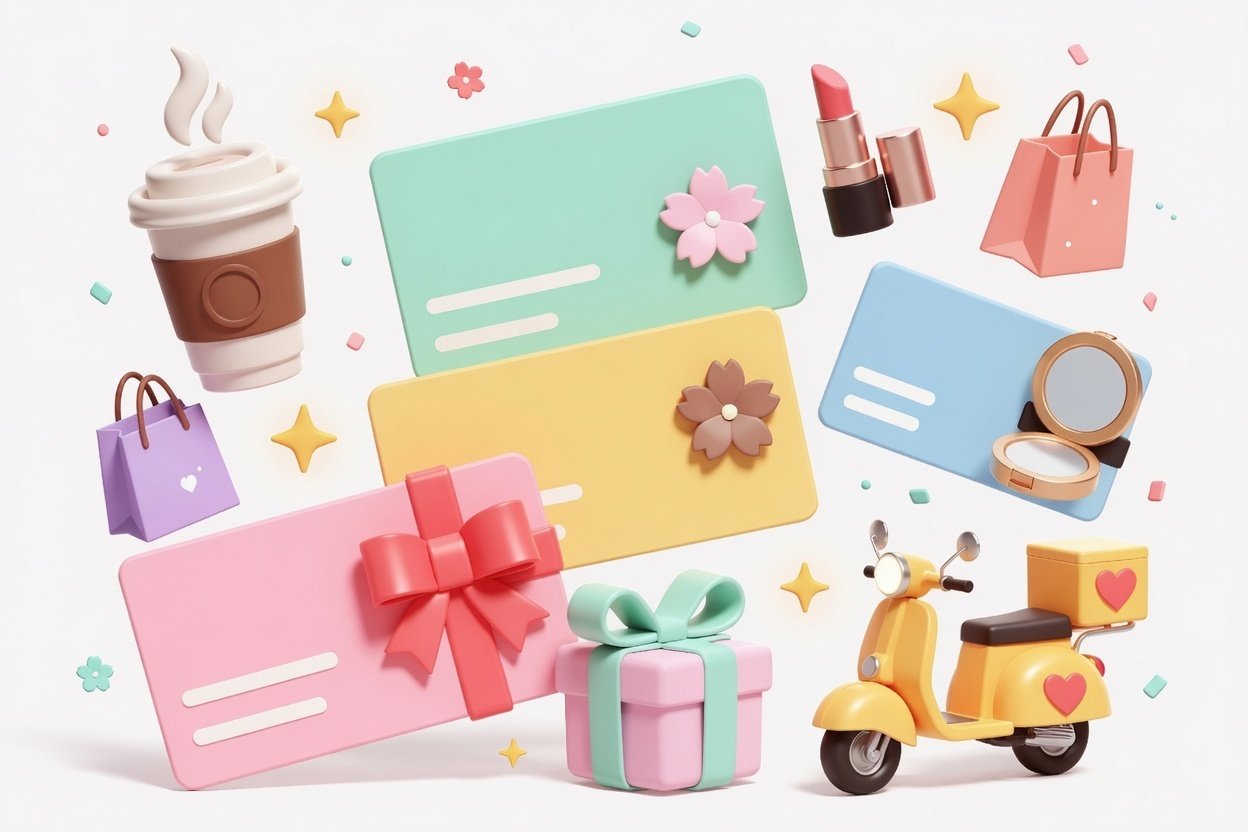
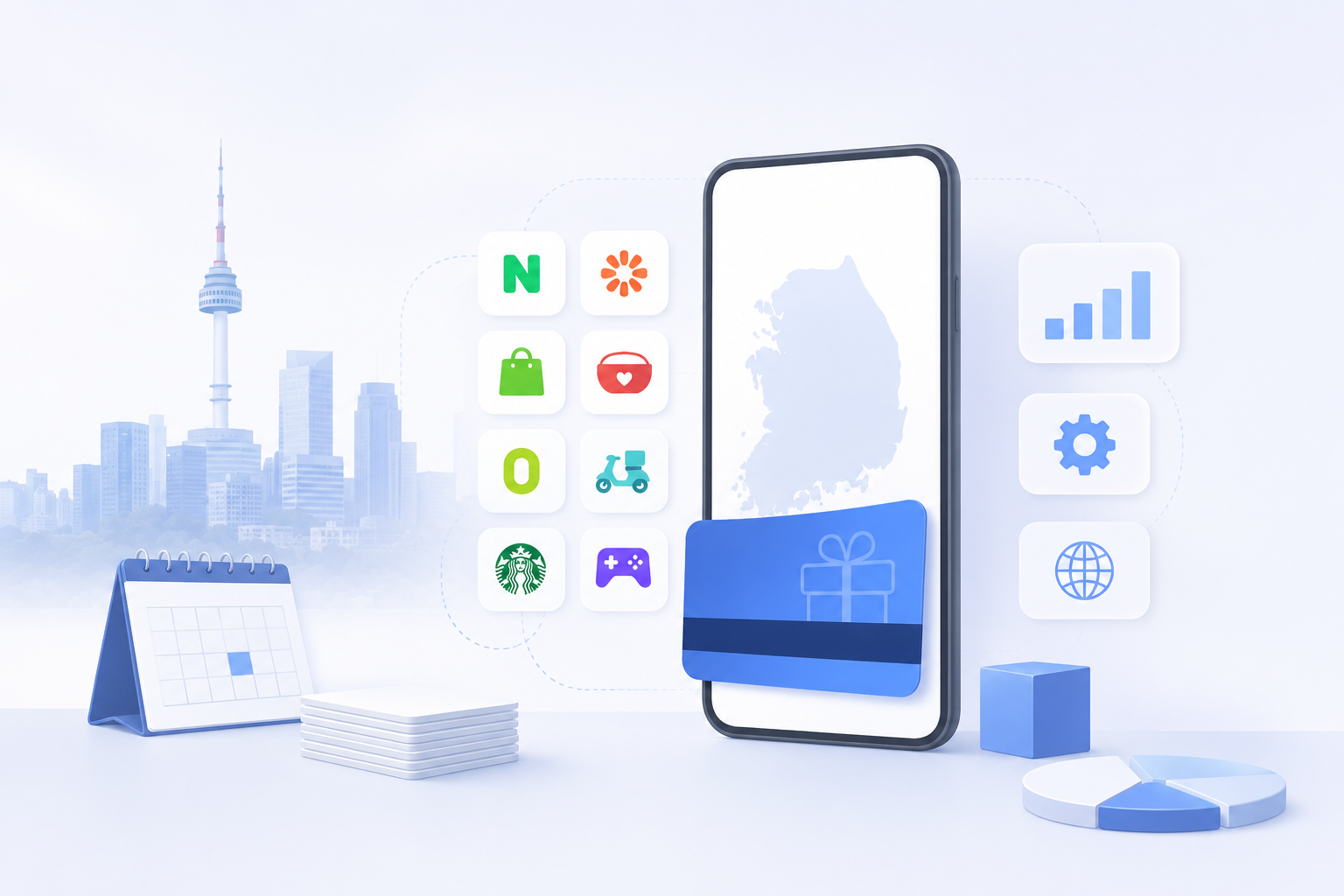
Korea’s gift card market reached $7.46 billion in 2025 (GlobeNewswire, 2026). The catalog is dominated by brands that Korean recipients use daily: Naver Pay, Coupang, Olive Young, Baemin (delivery), Culture Land (books and culture), Starbucks, GS25, and Emart.
This is not a market where a Visa prepaid card closes the gap. Korean recipients notice when a reward is local — and they notice when it is not. A Naver Pay or Coupang gift card carries real utility inside the Korean daily purchase ecosystem. An Amazon gift card does not.
For any global rewards platform, the catalog question is not whether to add Korean options, but which brands, in what denominations, and through what delivery model.
Across every first conversation with a global partner evaluating Korean gift card sourcing, four questions appear consistently.
The depth of the catalog matters as much as the headline brand count. A Korean gift card catalog should cover daily-use retail (Coupang, GS25, CU), food and delivery (Baemin, Starbucks, Subway Korea), beauty (Olive Young), digital and entertainment (Naver Pay, Culture Land), and broad-use brands that complement local preferences. Wincube’s Korean catalog covers 200+ brands built on 15 years of direct brand relationships.
Yes — and this matters for program integrity. Korean gift cards are denominated in Korean won. Platforms that attempt to pass through USD or generic prepaid values in KRW-equivalent lose precision, and recipients notice the mismatch. KRW-denominated issuance is the standard, and it requires a supplier with direct Korean market infrastructure.
For platforms processing regular or automated reward delivery, API integration is the standard path. A well-documented API handles catalog queries, real-time inventory checks, order placement, and delivery confirmation. Bulk fulfillment — CSV-based, batch-processed — serves programs that run periodic distributions rather than event-triggered rewards.
This depends on the delivery model. API integrations support individual item delivery with no volume floor for each transaction. Bulk orders typically start at modest quantities to cover processing. For platforms still evaluating fit, pilot orders are a reasonable starting point before committing to a full integration.
Not every supplier with Korean brands on a catalog page has the operational depth to serve enterprise programs at scale.
The indicators that matter:
Global buyers approaching Korean gift card sourcing for the first time typically move through a short scoping process before any technical work begins.
The conversation covers: program type (employee rewards, loyalty, research incentives, marketing), expected volume (monthly or quarterly order size), delivery model preference (API, bulk, or hybrid), and geographic scope (Korea-only or multi-market).
From there, a catalog review follows — matching the buyer’s use case to the right brand selection and denomination range. Technical integration planning or a bulk order pilot begins once both sides confirm fit.
There is no gatekeeping. The conversation is direct, scoped to the buyer’s program, and focused on whether Korean gift cards solve the specific problem at hand.
If your rewards platform is ready to add Korean gift cards — or if you are still evaluating whether Korean recipient coverage is a gap worth closing — the starting point is a direct conversation with our team.
Bring your program scope, your delivery model preference, and your questions about the Korean catalog. We will cover the rest.
Related reading: Korean Gift Card API for Rewards Platforms: 2026 Guide · South Korean Survey Incentives: Gift Cards, Amounts & Delivery
Contact the Wincube team: win-obdteam@wincubemkt.com