Digital Gift Cards
Global Gift Cards
CROSS BORDER GIFTCARD
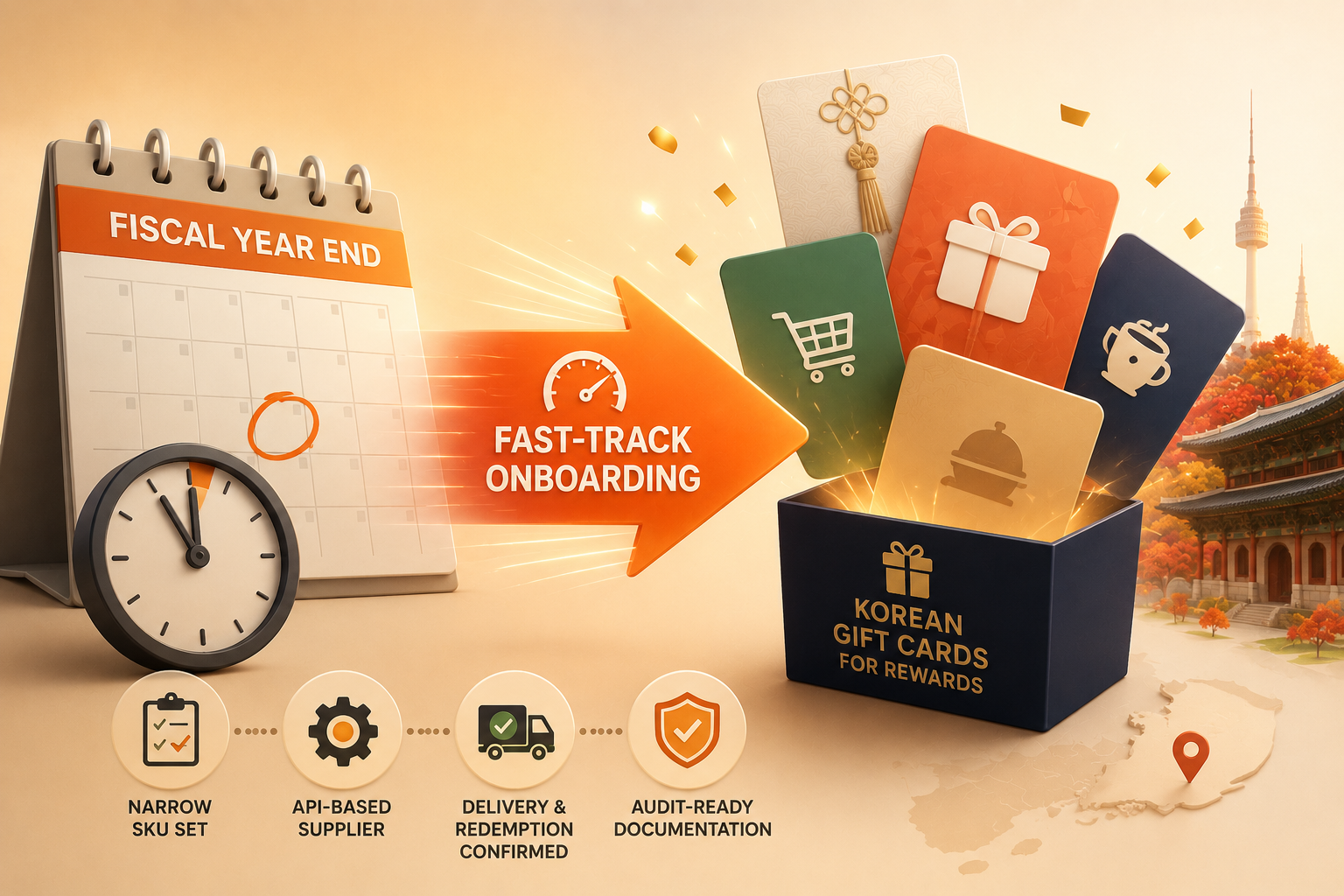

For most IT and SaaS platform teams, the fourth quarter brings a familiar squeeze: a partnerships or program budget that has to be spent down before the books close, and a rewards catalog that still doesn't cover one of the markets users keep asking about. Korea is usually near the top of that list, and the usual answer, "we'll add it next cycle," stops being acceptable once finance starts asking why unspent reward budget is sitting idle with weeks left on the calendar.
In short: IT platforms with reward budget to clear before fiscal year-end can add Korean gift cards to their catalog inside days rather than months by scoping a narrow SKU set, using an API-based supplier instead of a manual procurement cycle, and confirming delivery and redemption mechanics before committing spend. The rest of this guide walks through why Korea specifically creates onboarding friction, what a compressed timeline actually requires, and how to structure the request so it survives a year-end audit.
The pressure behind this is not anecdotal. The global gift card market is projected to grow from $1,498.2 billion in 2025 to $1,729.02 billion in 2026, a compound annual growth rate of roughly 15.4% (The Business Research Company, Global Gift Cards Market Report 2026, 2026). That growth is pulling more reward, loyalty, and partner programs into markets they haven't previously supported, and Korea is one of the highest-demand additions for platforms with any Korean user base, developer community, or channel partner presence.
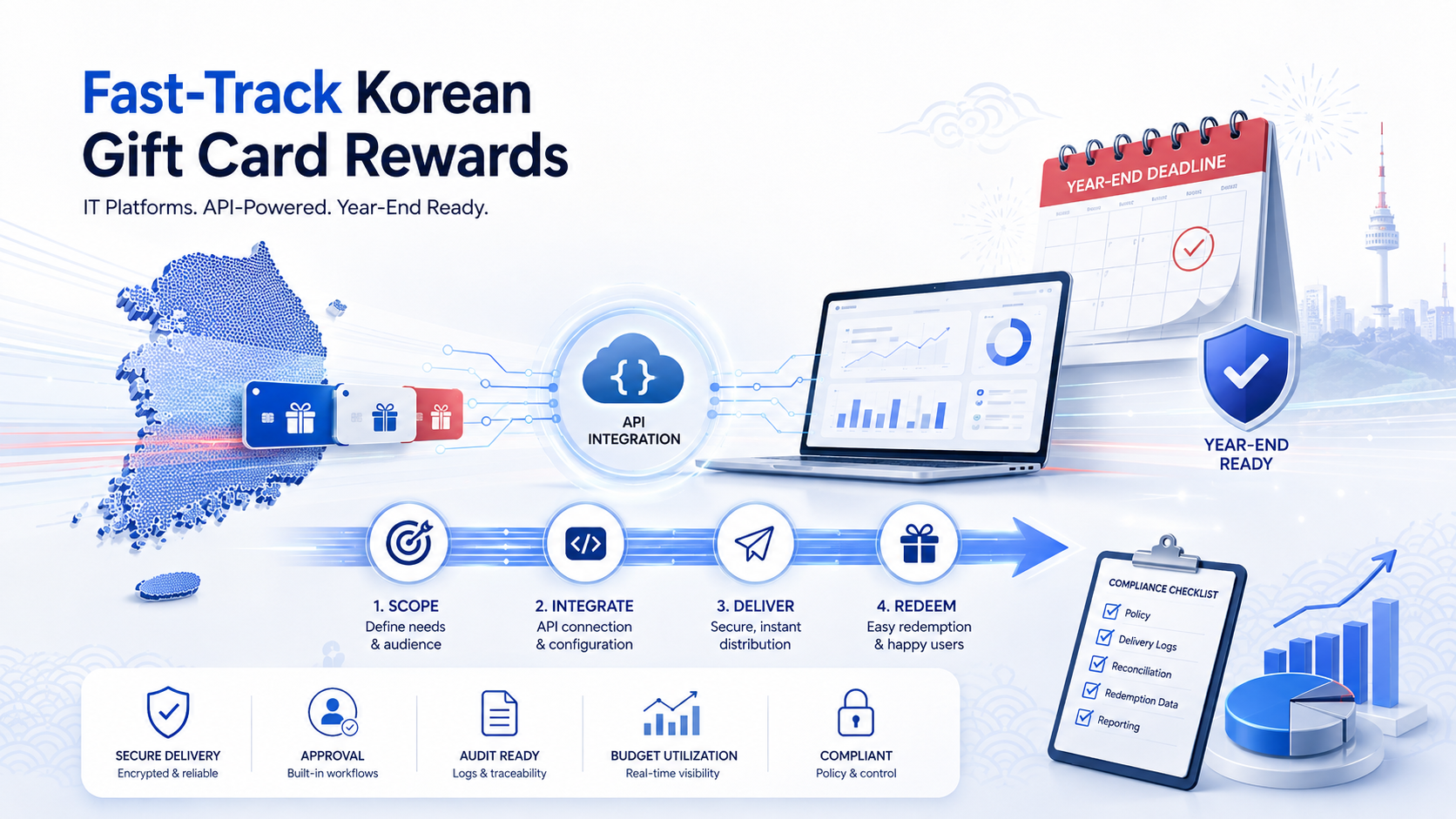
Reward and partnership budgets in most IT organizations are annual line items. If a partnerships manager has allocated funds for catalog expansion, unused balance at fiscal close is typically either forfeited or clawed back into next year's planning at a lower baseline, which makes the case for expansion harder the following cycle. That turns "we should probably support Korea eventually" into "we need this live before the close," and it's the reason program managers start looking for onboarding paths measured in days, not the multi-month timelines that a traditional local sourcing arrangement usually requires.
The complicating factor is that Korea is not a market where a platform can simply extend an existing global gift card integration. Local card brands, redemption networks, and delivery formats differ enough from the rest of a typical rewards catalog that "just add Korea" tends to turn into a scoping exercise with legal, compliance, and product all pulled in, which is exactly what a tight timeline can't absorb.
Korean gift cards span convenience store networks, department store and duty-free brands, mobile carrier top-ups, and app-store style credit, each with its own denomination structure and, in some cases, regional restrictions on where a card can be redeemed. A platform trying to hand-source these individually is effectively running a mini-procurement project inside its reward program, which is where most year-end timelines quietly slip.
Many Korean gift cards are issued as a mobile barcode or PIN rather than a physical card or simple email voucher, and the redemption flow can require a Korean phone number or a specific in-app step. A rewards catalog built around a generic international delivery template will often break silently for Korean recipients unless the delivery format is mapped correctly before launch, not discovered afterward through support tickets.
Cross-border purchasing of Korean gift card inventory touches local payment processing and, depending on volume, KYC and reporting requirements that a platform's existing vendor terms may not cover. This is usually the step that pushes a manual sourcing effort past the fiscal year-end line, because legal review on a new local payment relationship rarely finishes in a matter of weeks.
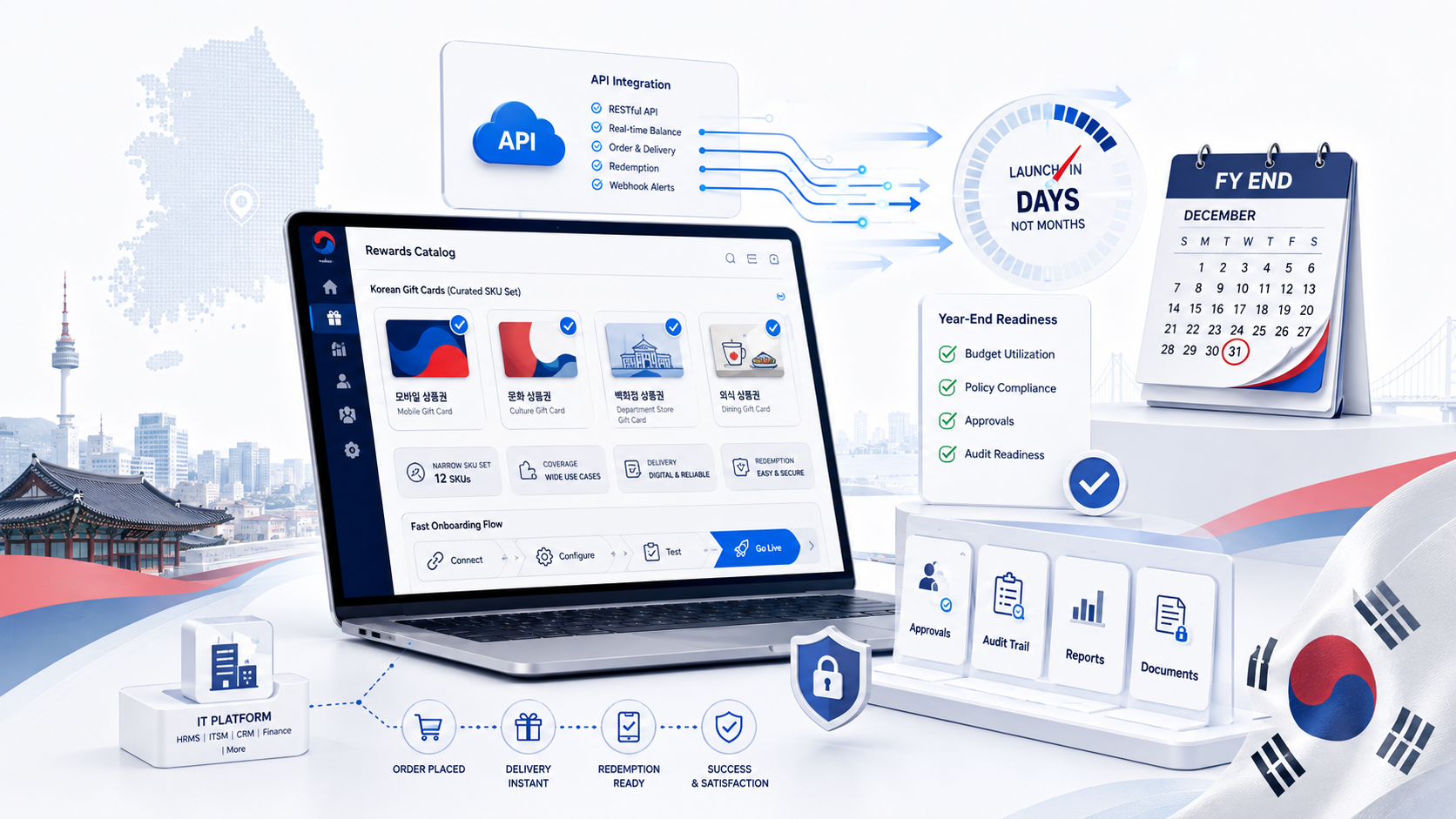
Program managers who have successfully cleared year-end budget against a new Korean catalog addition tend to follow a similar sequence:
Working through that list in order is usually the difference between a Korean catalog addition that closes out cleanly against this year's budget and one that stalls in legal review past the deadline.
Wincube Global operates a gift card supply infrastructure built for exactly this kind of compressed timeline, with API-based ordering that removes the manual quoting and PO cycles that typically stretch a local catalog addition past a fiscal year-end deadline. The company processed over USD 220 million in gift card GMV in 2025 across a catalog of more than 30,000 gift cards spanning over 90 countries, including a Korean card catalog built around the local delivery formats and redemption networks described above.
If this is relevant to your team, Contact Us and we can walk through what it would look like.
How long does it typically take to add Korean gift cards to an existing rewards catalog? With an API-based supplier and a narrowed initial SKU list, a Korean catalog addition can often go live within days rather than the months a manual sourcing and legal review cycle usually requires, provided delivery format and settlement terms are confirmed upfront.
Why can't a platform just extend its existing global gift card integration to cover Korea? Korean gift cards frequently use mobile barcode or PIN-based delivery tied to a Korean phone number, and the card brands available differ from most international catalogs, so a generic delivery template built for other markets will often fail silently for Korean recipients without a mapped integration.
What is the biggest risk in rushing a Korean catalog addition before fiscal year-end? The most common failure point is compliance and payment rails, since cross-border purchasing of Korean gift card inventory can trigger KYC or reporting requirements that a platform's existing vendor terms don't cover, which is what usually pushes a manual sourcing effort past the budget deadline.
Sources
Related reading: Korean Gift Card API for Rewards Platforms: 2026 Guide
Contact Email : win-obdteam@wincubemkt.com